Chapter 4
This school year is her final year in high school. What she will do afterward is still not clear to her. Sometimes, when she thinks of the homeless people in the city, she feels she wants to do something for people who are in trouble. At other times, she hears musical notes tumbling over one another in her head and seriously considers the conservatory.
“Why don’t you consider doing the orientation year at the Evangelical University?” her mentor had suggested recently. She had nodded and left it at that.
She still hasn’t decided. Is she perhaps waiting for a direction or a sign? But isn’t her musical talent already a clear sign? And isn’t her deep empathy for people in need a talent as well? Wouldn’t it be perfectly natural for God to intend that she make use of the talents she already has—and leave the development of those she has little or none of to others? That makes the choice seem simpler. Could she perhaps combine the two? She truly doesn’t know how. In moments like that, when she worries, she can feel very sad and uncertain about the purpose of her life.
In the final weeks before the Christmas break, extra music lessons are given at school. The school orchestra is practising intensely for the performance in the Sint Jan on the last day before the holidays. Because Liza also plays in the orchestra, she goes to the music room during the break.
“Ah, Liza, come in,” Mr. Toon greets her when he sees her. There aren’t many students yet. They’re probably still in the lunchroom.
“Liza, I’d like to ask you something,” Mr. Toon says. Liza looks at him questioningly.
“You were supposed to play that Brahms piece together with Hanneke, but Hanneke is really dreading it. If you feel up to it, you could play it on your own, or we could cut the piece altogether. I don’t know of a replacement for Hanneke.”
Liza’s thoughts suddenly race. She—alone at the front of the Sint Jan? Would she dare? She thinks back to the night she stood alone at the pulpit and played. That had been easy, without an audience. But would she dare to do it in a packed church? She feels herself growing warm. Mr. Toon watches her, noticing her dreamy look.
“I’ll do it,” Liza suddenly says. “But I’d like to play a piece by Pavarotti instead of Brahms. Would that be allowed?” She looks at her music teacher.
“Pavarotti?” he says hesitantly. “I’ll have to see if I have sheet music for that. Tell me, what time are you finished today?”
“I’m done after eighth class,” Liza answers.
“Come by afterward, then. In the meantime, I’ll ask Mr. Noot. He always has rather unusual things lying around. How did you suddenly think of that?”
“Last week, there was a music group from Amsterdam in the Sint Jan, and they played works by Pavarotti. It was very beautiful. I can play it now, if you like,” she adds quickly. Mr. Toon smiles. He has known Liza for several years and knows she can play what she has heard.
Liza takes her violin and begins to play. Meanwhile, the other students enter the room. Quietly, they take their seats and listen. Mr. Noot has also slipped into the room unnoticed. He remains standing by the door, and when Liza stops playing after five minutes, he says enthusiastically,
“That was Pavarotti.”
Liza turns around in surprise, a happy smile appearing on her face.
“I have sheet music for that,” Mr. Noot says. “Would you like to borrow it?” Liza nods.
Mr. Toon steps in. “Liza would like to play something by Pavarotti at the performance instead of the Brahms piece.”
Mr. Noot’s face brightens. “Fantastic idea, don’t you think? Liza, come by my place tonight around eight, and I’ll make sure the music sheets are ready for pickup. You’ll want to practise a bit more, won’t you?” Liza nods again. She feels shy under the looks of the other students, but she is also very happy.
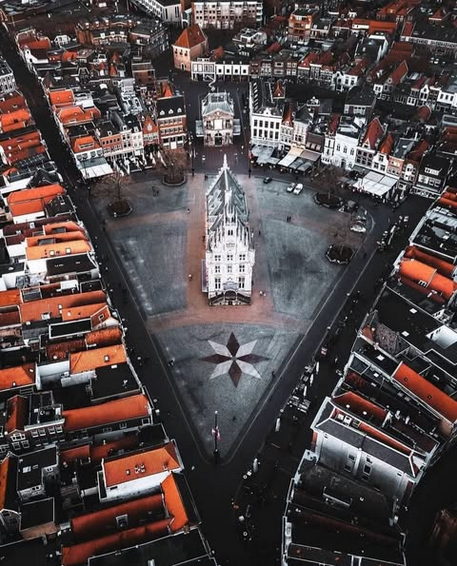
Like Liza, Mr. Noot lives in the city centre. He rents an apartment above a café facing the market square. Once, when she ran into him in town, she had asked if he didn’t mind living above a café, since there must be a lot of noise.
“Oh no,” he had said, “it’s actually very convenient, all that noise. I don’t complain about their noise, and they don’t complain about my music.” It sounded logical enough, but Liza still wondered whether he could sleep properly.
“Sleep?” he had said. “They close the place around midnight. I never go to bed earlier than that anyway.”
“Oh,” Liza had replied. She couldn’t imagine going to bed that late every night. School would surely suffer.
At quarter past three, Liza finishes for the day. She cycles part of the way with Hanneke.
“That Christmas performance really made me nervous,” Hanneke says. “I’m glad I don’t have to stand at the front alone. Aren’t you nervous? And don’t you feel let down by me?” Liza shakes her head.
“I actually just find it exciting. I still need to study the music further, but I’m really looking forward to it. It’s a lovely piece.”
“I’ll be rooting for you,” Hanneke says as they reach the traffic lights.
Liza smiles. “Thanks,” she calls, turning right toward the city centre, while Hanneke goes left.
The weather is gloomy and cold, but Liza doesn’t mind. In several houses she passes, Christmas trees are already lit. All those little lights—so nice, and so cozy. At the Kleiweg Bridge, she gets off her bike and walks along the shops. She hasn’t had time to really look at them yet. Pushing her bike beside her, she passes the decorated display windows. Very slender mannequins show off beautiful clothing in white and black, framed by pine greenery and dark red Christmas ornaments. The game shop window is decorated with blue garlands and blinking lights. I’d go crazy having to look at it all day, Liza thinks. The chocolate shop always looks tempting, but now it resembles a beautiful Anton Pieck scene.
Halfway along, she stops in front of the bookstore—just to see if there’s anything new. She quickly moves on. It looks more like the window of a restaurant or a bakery. Every year, Liza helps her mother bake apple pies for Christmas and oliebollen for New Year’s Eve. The recipes rarely change. They always taste good.
Downtown is busy. Everyone seems rushed. Around this time, the elementary schools are letting out as well. Mothers take their children into town to do some shopping. Liza weaves her bike through the Christmas shoppers. When she reaches the market square, she gets back on her bike. Slowly, she cycles on, looking around and taking everything in. She loves this atmosphere. The Christmas tree on the market has been lit since last night. It towers above the people admiring it. Crowd barriers have been placed around the base so people can’t get too close to the wiring.
A little later, she cycles behind the church. Here, it is peacefully old-fashioned. The stately Sint Jan rises high on her left. She pedals under the arch, past the Catharina Gasthuis, and soon she is home.
The shop lights are on. Mom works there every day until New Year’s. That automatically means Liza helps with the cooking. She puts her bike in the shed and opens the kitchen door. On the counter sits a bowl of potatoes, and beside it lies a bag of chicory. She decides to clean those first.
She takes her schoolbag to her room and hangs up her coat. She kicks off her shoes in the hallway and slips into the warm, chocolate-brown slippers with a bear’s face that she received for her birthday three weeks ago. After a glass of cola and a small stack of cookies, she peels the potatoes and chops the chicory. Within half an hour, everything is in the right pan, and Liza goes to her room to do homework. Anything she finishes now won’t have to be done tonight. She still has to stop by Mr. Noot’s to pick up the sheet music.
At half past five, Liza turns on the stove. The gravy pan with meat is in the fridge and goes on a burner as well. While keeping an eye on the pots, she practises her violin lessons. She sighs. It is a busy month. First Gouda by Candle Light, then two performances. And in the week before Christmas, there is also an exam week at school. She’s sure it will all work out. She has kept up with her homework fairly well, and during exam week, she will go over everything carefully.
Gratefully, she whispers, “Thank You, Lord, that studying comes easily to me.”


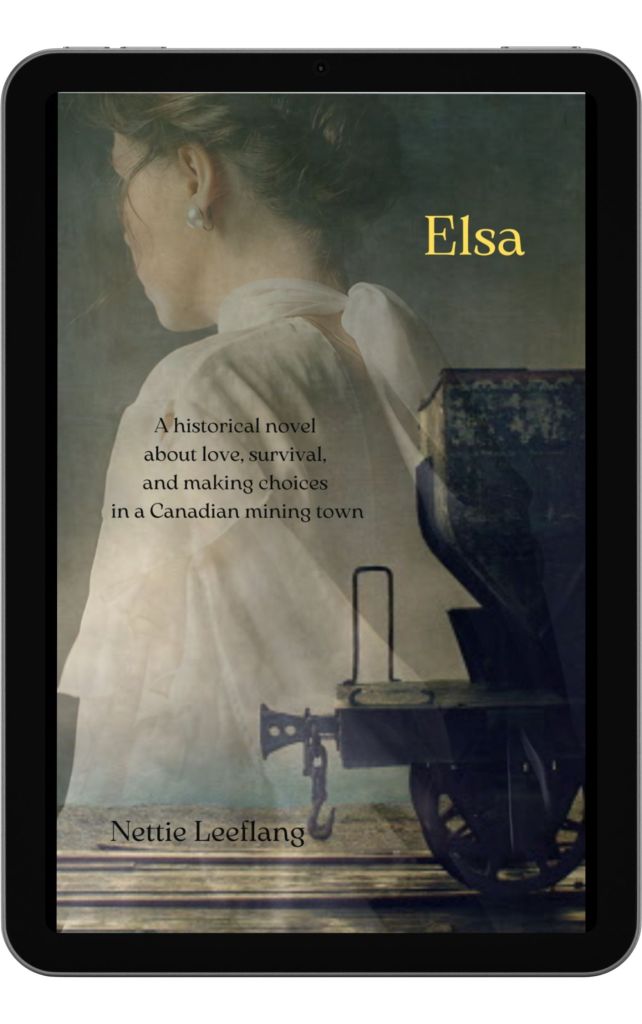
Are you looking for a Christmas gift? Check out Hitchhiker – a young adult novel, and Elsa – a historical novel
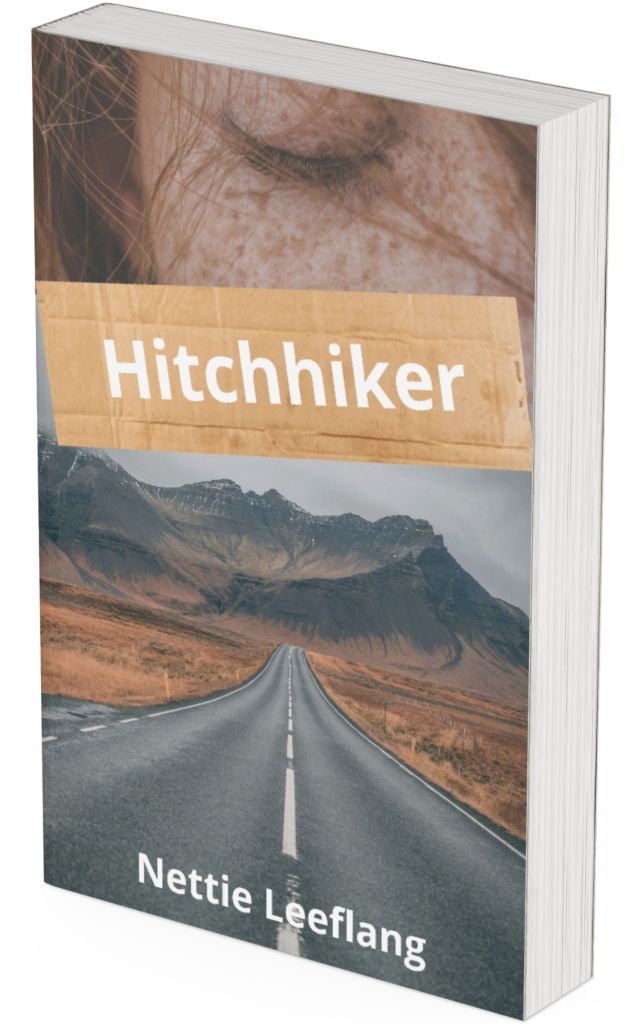
Hitchhiker: nineteen, homeless, and chasing a dream — can Nadia survive without losing herself? She left with hope. She stayed for survival on Victoria’s unforgiving streets.
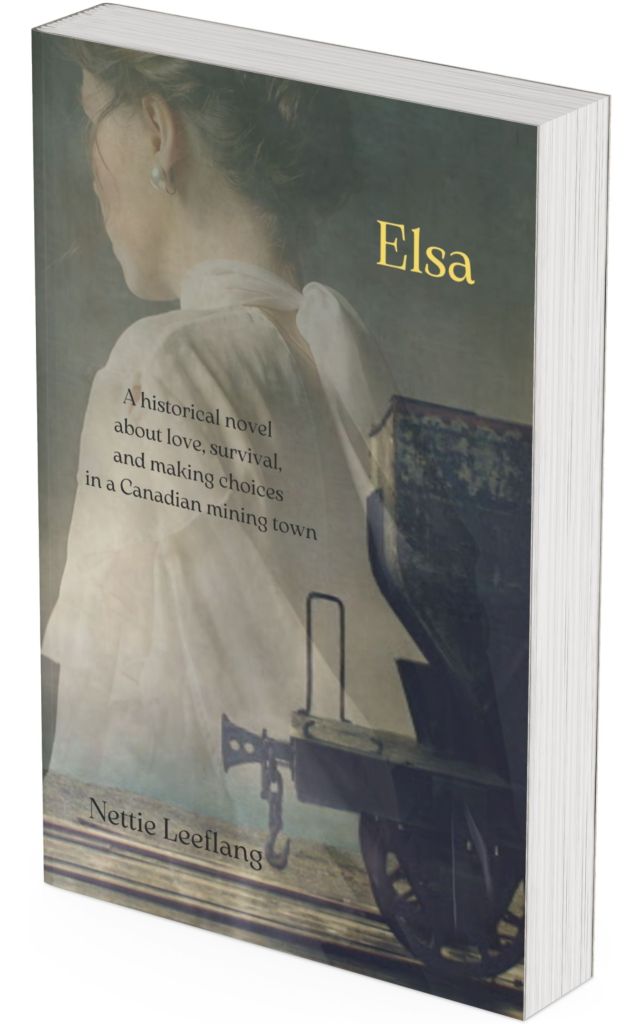
Elsa, a stirring novel of resilience, heartbreak, and the unspoken bond between women who walk through fire and keep walking.
Check out the books of my fellow Vancouver Island Authors and Illustrators.
 Nettie Leeflang