Chapter 3
Carefully, Liza pushes the heavy, old green–painted door to Willem Vroesen Square open with her shoulder. She hauls her violin case with her, along with a bag of sheet music and her music stand. The narrow corridor with the mailboxes is dim. Because it’s Candlelight Evening, no streetlights are lit anywhere in the old city. At the far end of the passage, she catches a faint, flickering glow. The door to the enclosed courtyard stands open.
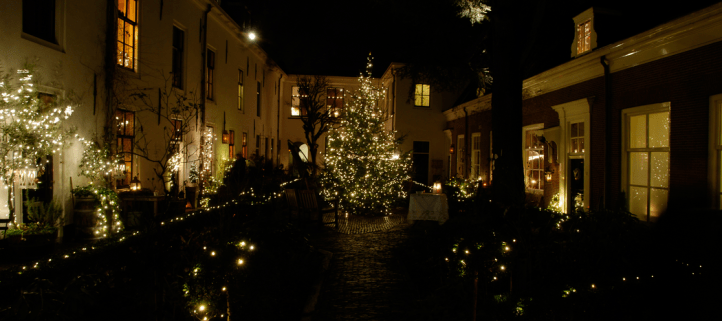
From the doorway, she takes in the oval-shaped square. The walls of the former almshouse rise up, tall and ghostly white. Behind the narrow, high windows, candlelight twinkles invitingly. In the centre of the garden, a fire basket burns. Around the garden, along the houses, dark figures move about, peering curiously into the dimly lit rooms at the beautifully decorated Christmas trees.
She wonders if anyone from her music school group has arrived yet. It’s too dark to make out faces at the back of the courtyard. At the far end of the garden, on the right-hand side, Aunt Els lives. Whenever Liza happens to run into her—cycling past on her black ‘grandma bike’—Aunt Els usually strikes up a conversation. Their talks always wander from one topic to another.
Liza had told her she was looking for a nice spot where her music school group could play Christmas carols on Candlelight Evening. Aunt Els had responded immediately and enthusiastically, saying they were more than welcome to play in front of her door. There was enough space there for one of the music groups to stand. Liza had suggested it at the music school, and Mr. Kwartsmaat thought it was a great idea.
She’d never dared to dream it would look this romantic tonight.
Carefully, she walks along the cobblestone path beside the houses, peeking into the homes just as the tourists do. Everything inside looks warm and inviting. Liza pulls her scarf a little higher. Outside, the wind cuts through her coat.
At Aunt Els’s house, she sees the front door standing slightly ajar. A large wreath of ivy leaves hangs on the door. Small gift boxes in cheerful colours, tied with ribbon, are fastened to the wreath. Beneath the window, beside the door, stands a green bench — exactly the same old green as all the doors of the city’s historic houses. The boxwood in the pot next to the bench is decorated with lights.
Through the windows, Liza sees a Christmas tree reaching all the way to the ceiling, filled with red and gold baubles and handmade gift boxes tied with ribbon. A golden angel crowns the top.
“Hello, Aunt Els!” Liza calls through the crack in the door.
At once, Aunt Els appears from the little kitchen on the other side of the corridor.
“Ah, Liza, you’re here already.” Aunt Els drapes a large white-and-gold stole over her black festive dress and steps outside.
“You can stand here,” Aunt Els says, pointing. “Are there more musicians coming?” She looks around expectantly.
On the path, Liza sees two members of her group approaching.
“There are a few coming now,” she says to Aunt Els. But Aunt Els no longer hears her. People have entered the courtyard and are asking about its history. With great enthusiasm, she begins to tell them.
“Shall we stand here?” Liza suggests to the two young boys walking up to them. Both are carrying trumpets. Nice, Liza thinks, this will sound beautiful.
They set up the music stands and place a trumpet case on the ground for tips. But when they’re ready to start, they realize they can’t read a thing on their sheet music. It’s simply too dark.
They rearrange themselves and, with their backs to the candlelight and the glow of Christmas trees shining from the houses, begin to play their carols. Liza’s violin doesn’t quite rise above the trumpets at first, but soon another violinist joins in to support her. Once the group is complete, there are eight musicians: two trumpeters, two violinists, a flutist, a guitarist, a recorder player, and even someone with a tambourine who can imitate the jingling bells of a sleigh.
They’re lucky with their little group. The audience seems to think so, too, because coins rain into the trumpet case. After each song, they pause briefly to rub their hands together, then eagerly begin again. After about half an hour, Mr. Kwartsmaat stops by to see how things are going. He’s clearly pleased. He places a sign from the music school beside the musicians—this is a group he doesn’t mind advertising. Then he moves on through the city to check on the other music groups.
After an hour of playing, around seven o’clock, Aunt Els treats them to a cup of hot chocolate. People from the other houses bring chocolate wreath cookies and slices of Christmas stollen. Despite the cold that makes her fingers tingle, Liza enjoys it all. With her hands wrapped around the hot mug, she looks out over the square, trying to make out faces in the darkness.
Suddenly, she feels a jolt. Her face grows warm, and she smiles shyly at the dark figure watching her.
“Who would like another cup of hot chocolate?” Aunt Els calls out. Liza turns around.
“I would, please,” she says.
“But you haven’t finished yours yet,” Aunt Els says, surprised.
“It’s not for me,” Liza replies softly.
“All right,” Aunt Els says. “Here you go.” Liza takes the full mug and carefully walks into the darkness.
“For you,” she says shyly. His eyes light up.
“Wonderful, thank you — I could really use that.”
“Are you hungry?” Liza ventures.
“Not really. I’m just very cold.”
“Liza, we’re continuing,” someone from the group calls out.
“I have to go back now. See you later — maybe?”
“I’ll keep listening to you tonight.”
Liza quickly returns and takes her place behind her music stand. Every so often, she glances into the darkness. Then she catches sight of his pale face and shining eyes. She hears him cough. He’s not getting sick, is he? she wonders.
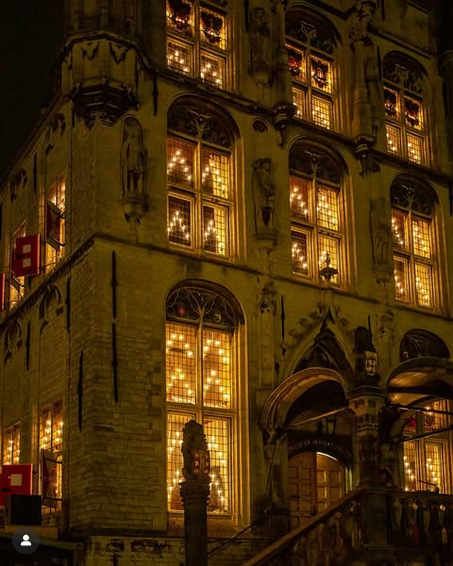
At half past seven, the trumpeters decide to head home. They still have a long bike ride ahead of them and want to stroll around the market for a while, admiring the Christmas tree and all the candles glowing behind the windows. The rest of the group agrees; they’re shivering with cold. Satisfied, they peer into the trumpet case filled with coins. Once the money is counted and divided, each of them is holding €8.15.
“I’ve earned more tonight with my hobby than I do doing chores for my mum,” one of them says with a grin.
“Yeah, but you did work the evening shift, kid,” another one laughs.
A little while later, after thanking Aunt Els, everyone heads home in good spirits.
Liza looks around to see if she can spot the homeless man again. In the middle of the garden, close to the fire basket, she sees someone crouched on the ground. She hears him coughing once more.
“Are you all right?” she asks.
The homeless man looks up and tries to smile. Liza sees him shivering with cold. Again, she notices the shine in his eyes.
“Are you sick?” she asks.
“I don’t know. Maybe. It’s so cold,” he says. He gets to his feet, and Liza notices how tired he looks.
“Where are you sleeping tonight?”
“Over there,” he says, nodding his head, “in the garden by Sint-Jan’s.” With a mischievous grin, he adds, “Nice and close to you.” At that moment, Liza can’t appreciate his cynicism.
“Why don’t you go to the Salvation Army?” she asks. “They must have beds there, right?”
The homeless man shrugs. “I’ve already been there too many times this month. I could go to the night shelter, but you have to pay for that—and I didn’t earn enough today.”
Liza slips her hand into her coat pocket and pulls out a handful of coins.
“Can you use this?” she asks.
“I can’t take that,” he says. “You stood out here all evening, playing in the cold for it.”
“Are you trying to make me angry?” Liza asks, indignant. “I want to give this to you, and you have to take it.” She grabs his freezing hand and presses the money into it. “Don’t you dare give it back,” she adds, half-threatening.
“I have to say, I didn’t expect that much fire from you,” the homeless man chuckles.
“Liza, Liza!” Aunt Els calls from behind her. Waving energetically, she comes hurrying over, an orange Christmas hat with a pom-pom in her hand.
“Is this yours?” she calls.
“No, I don’t have a Christmas hat—but I’d love one,” Liza adds quickly.
“Here, take it. I’ve got no use for it.” Aunt Els turns and disappears back into her warm little house.
Liza grins. She sets her things down, unfolds the hat, and gently tries to pull it over the homeless man’s head.
“Hey, don’t,” he protests.
“You should wear it,” Liza says firmly. “If you’re cold, you need a hat.” She laughs when she sees the shy, sheepish grin on his face once the hat is on.
Then she picks up her violin case and music stand, and together they walk toward the courtyard exit.
The city is still bustling; the evening’s celebrations will go on late. At the bridge that links the Willem Vroesen Garden, the Willem Vroesen House, and Sint-Jan’s, Liza and the homeless man say goodbye.
Before heading back into the sexton’s house, Liza steps into the little shop of Sint-Jan’s across the street. She pushes open the large oak door and climbs the five steps inside. Miniature stained-glass windows—the very ones Sint-Jan’s is famous for—hang everywhere. Behind the tall, old-fashioned wooden counter stands her mother, carefully wrapping a small stained-glass window on a chain in gift paper.
“Hi, Mom, I’m back,” Liza says. Her mother glances up briefly.
“Did you have fun?” she asks.
“Yes,” Liza replies. “It was lovely, but cold.”
“Go home and have something warm to drink,” her mother advises.
Liza peeks her head around the church door. Along the path by the choir, she sees her father standing with a small group of tourists, explaining the stained-glass windows. They probably won’t understand everything, she thinks, because in the nave the musicians of De Pionier are playing, and the crowd that has gathered is singing along at the top of their lungs. For a moment, she listens to “the heavenly angels who once called to the shepherds,” but then quickly ducks back into the shop. Brr—it’s far too drafty in the church.
“Bye, Mom,” she calls as she goes down the little staircase to the street. Her cold fingers fumble for her keys in her coat pocket. It’s not easy, but she manages. A moment later, the large door swings open inward. It’s cold in here, too, she thinks. She sets her things down to the left, in front of her bedroom door; she’ll bring them in later.
Still wearing her coat, she walks into the living room on the right. A miserable little pile of ash smoulders in the fireplace. She opens the woodstove door and tosses in a fresh log. Soon flames lick along the wood, and Liza feels the warmth climbing up her legs. She stretches her hands toward the fire, which quickly begin to tingle.
Oh, this is wonderful, she thinks contentedly. She squats in front of the hearth, and the warm glow turns her face rosy. Slowly, her thoughts drift back to Willem Vroesen Square. It had been fun, making music together. Once again, she sees the sheepish face of the homeless man, the orange Christmas hat perched on his black hair. She smiles at the flames.
He’ll be at the night shelter now. Maybe he’s already lying in a bed, or sitting with a bowl of hot food in front of him.
She gets up and goes to the kitchen to put water on for a cup of hot soup. Cradling the steaming mug, she curls up in her father’s armchair. Carefully, she sips the soup, tucks her legs underneath her, and grabs her book from the coffee table. Before long, she’s absorbed in a thrilling medieval adventure.
She startles when the clock strikes ten. Her parents will now be closing the church and the shop and heading home. Not once has she thought about homework. Oh well—she’ll do a few minutes before bed and get up fifteen minutes earlier in the morning. That should work.
She puts her book back on the table and places her mug in the dishwasher. Then she runs upstairs. Before diving into bed, she takes a quick shower. When she comes back down, her parents are home.
“Do you know where Pierre is hanging around?” her father grumbles, worn out from the long day.
“No, I didn’t see him tonight.”
“He’s not likely to get himself into trouble so easily,” her mother says soothingly.
“On a night like this, I wouldn’t be so sure,” he replies. Her mother says no more.
Liza wishes her parents good night and slips into her room. Carefully, she pulls the curtain aside a little and peers out onto the street. Looking to the right, she can see the entrance to the Willem Vroesen Garden. There aren’t many people out anymore; most are probably in cafés around the Market. A lone figure approaches. He’s coughing—and wearing an orange Christmas hat.
But—no—that’s the homeless man, Liza thinks in alarm. That can’t be right. He was supposed to go to the night shelter.
Carefully, she slides her window open a little. He’s very close now.
“Hey—listen—why are you still out on the street?” she whispers. The homeless man bends down so he can speak to her more easily.
“The shelter is full,” he whispers back. “I’m going to sleep in the garden.”
“But you can’t—not in this cold,” Liza says anxiously.
“It is what it is,” the homeless man says resignedly.
“I know something. I know where you can sleep tonight.” Nervously, she points past the house. “You can stay in our shed. Just go that way.” She gestures to show him where to go.
“Dear girl, your parents would never approve,” the homeless man says.
“No—but I do,” Liza answers firmly. “Go on ahead. I’ll be right there.”
She lowers the window again and fastens the latches. Then she opens her linen cupboard and grabs her sleeping bag and a mat. In her pyjamas, she sneaks down the hallway toward the back door. She takes the shed key from its hook, unbolts the door, and slips outside into the icy cold. Shivering in her thin pyjamas, she runs barefoot to the shed. Out of the darkness, the homeless man emerges.
Liza opens the shed door, rolls out the mat in an empty corner, and spreads the sleeping bag on top.
“Sorry,” she says. “I forgot to bring a pillow.” The homeless man laughs.
“That’s no problem. I’ll roll up my coat—it’s comfortable enough.”
“Good night,” Liza whispers, leaving the shed door slightly ajar. “The coast is clear. I’m going now. Oh—and tomorrow, just roll up the sleeping bag and mat. I’ll take care of them.”
Then she disappears into the darkness. Unseen, she makes it back to her bedroom and collapses onto her bed, trembling from the cold and nerves.
“Lord, please give him a little warmth tonight, and please make him better again,” she sighs. Still not entirely at ease with what she’s done, she crawls under her duvet patterned with pink and white roses. It takes a while before she drifts off.
She doesn’t notice that, an hour later, her bedroom door quietly opens, and someone whispers her name. When she doesn’t respond, the door closes just as softly.
It is still dark when Liza and Pierre sit down at the breakfast table the next morning. Mom is busy in the kitchen, making coffee and tea. The small lights in the garden and the lantern by the shed are still glowing. From her seat at the table, Liza has a clear view of the shed door.
Is he still there?
“You really shouldn’t do that again,” Pierre’s voice suddenly cuts through her thoughts. Liza looks up at him, startled.
“What do you mean?” she stammers.
“You know exactly what I mean. If Mom and Dad find out, you’ll be in serious trouble.”
“But it was freezing last night, and he had nowhere to go.”
“You don’t have to defend yourself to me. I don’t mind him sleeping there either, but you know how Mom and Dad think.”
Liza nods and lets out a barely audible sigh. Mom and Dad are good people, but sometimes they show very little empathy when it comes to people in need.
Mom comes in and pours a cup of tea for Liza and coffee for Pierre.
“You haven’t told us much about last night yet,” she says to Liza. “Was it fun? Did you earn anything?”
Liza looks up and swallows her bite of bread.
“It was really fun. There were eight of us. Lots of tourists stopped to listen. We each earned a little over eight euros.”
“That’s more than you’d make at the bakery. So you must have enough now to buy those boots you wanted?” Mom asks, looking at her expectantly.
Liza keeps her head bowed over her sandwich.
“I gave it away, Mom.”
“Gave it away? What did you give away?” Dad is standing in the doorway, his hair still uncombed, his beard unshaven.
“The money I earned last night playing on Willem Vroesen Square,” Liza answers.
“Well then—who did you make happy with that?”
Liza glances at Pierre. She can see from his eyes that he already knows the answer, but he says nothing.
“I gave it to a homeless man. He needed money for a bed at the night shelter.”
“A homeless man, you say? Can’t he earn his own money, like everyone else?”
Liza stays silent. Tears sting her eyes. She takes a few sips of her hot tea and slowly begins to calm down. I should have known, she thinks sadly. Should I have lied? Or should I have given him nothing at all? Deep down, she knows she did the right thing.
Silently, she finishes her sandwich.
Suddenly, Pierre stands up. “I’m off to school,” he announces. He grabs his jacket and bag, but before heading out to get his bike from the shed, he steps back into the room.
“Do you know what I’ve always found strange about this house?” he asks.
“Well, go on,” Mom encourages him.
“That it’s practically a mortal sin here if you’re willing to spare something for someone at the bottom of society.”
Abruptly, he turns, and a moment later, the kitchen door slams shut behind him.
The room stays quiet until Liza gets up and heads off to school herself.
“See you this afternoon,” she says to her parents, then slips out through the back door.
Everything in the shed is neatly put away; nothing hints that anyone slept there last night. On a high shelf along the wall, she sees the sleeping bag and mat, rolled up neatly. She’ll bring them inside later, when Mom is in the shop.
She grabs her bike, and moments later, she’s on her way to school. The whole ride, she keeps wondering why Pierre reacted so strongly.

Are you looking for a Christmas gift? Check out the two books I’ve written:
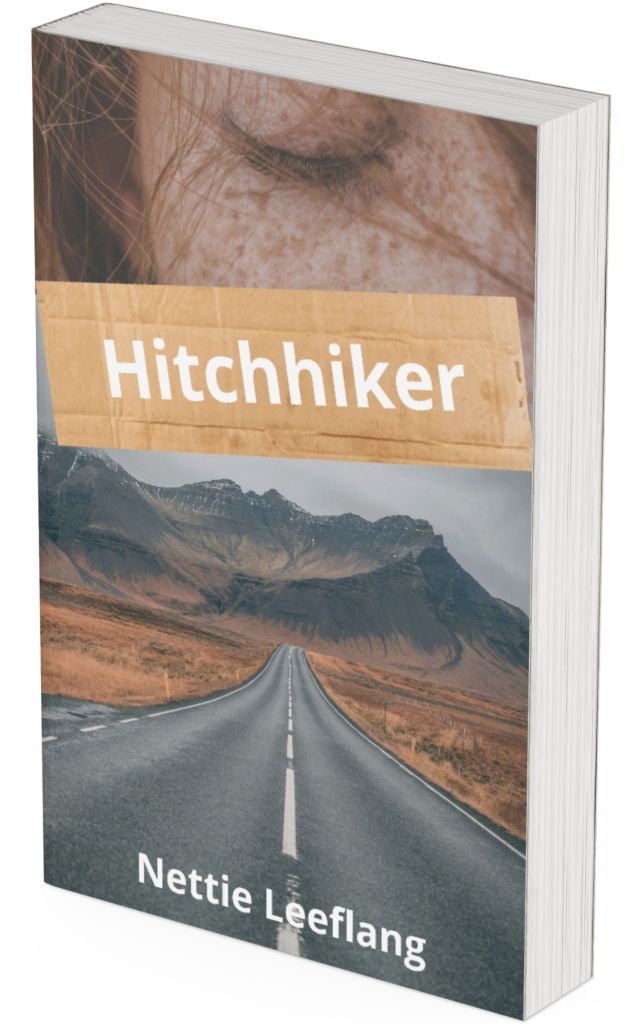
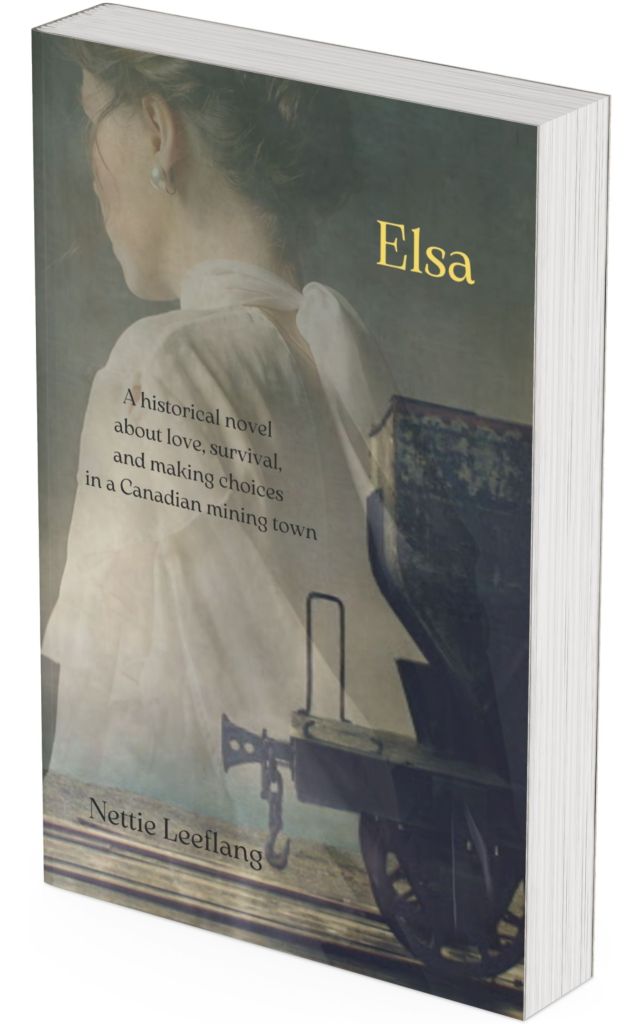
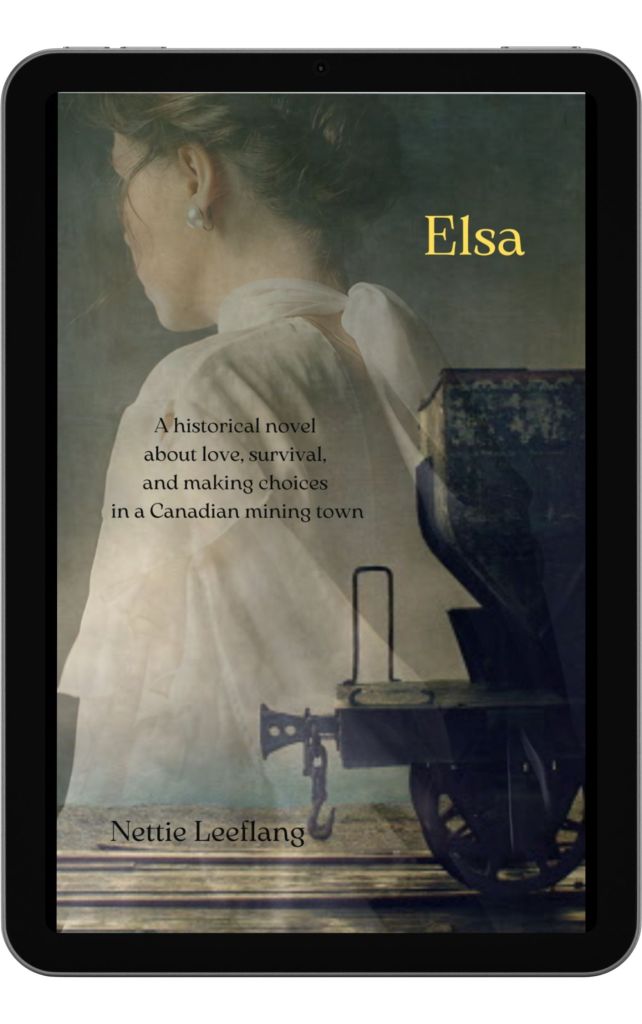
Hicthhiker is a young adult novel; Elsa is a historical novel.
Hitchhiker: nineteen, homeless, and chasing a dream — can Nadia survive without losing herself? She left with hope. She stayed for survival on Victoria’s unforgiving streets.

Elsa, a stirring novel of resilience, heartbreak, and the unspoken bond between women who walk through fire and keep walking.
Check out the books of my fellow Vancouver Island Authors and Illustrators.
 Nettie Leeflang