Chapter 1
New Year’s Eve
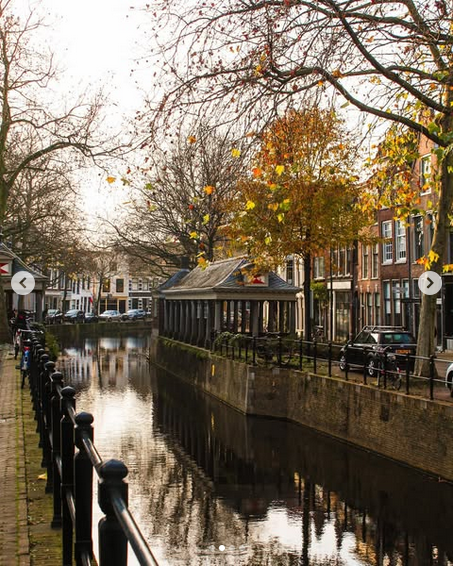
“Would you like to come with me on a boat tour through the canals?” Antonio looks at her, a quiet question in his eyes.
“Boating? On the canals?” Liza can’t help but laugh softly. Her, sailing through the canals with a homeless man? She can already imagine the looks people would give her. Would they even let them on the boat? And where on earth would he get the money to pay for it? She glances at Antonio, uncertain. His dark eyes, framed by thick lashes, look at her kindly. An evening on the water with this wanderer? Somehow, the idea appeals to her. In her mind, she sees herself sitting close to him on the barge, drifting across the dark water past the lit-up ships. Who really cares what anyone thinks?
“Okay,” she says at last. He offers her his thick, knitted mitten, and she shyly slips her suede-gloved hand inside. Hand in hand, they walk toward the Lage Gouwe, where the boat waits.
Last December had turned into an incredibly festive month, though it hadn’t always been that way. Liza remembered the years when hardly anyone came to see the giant Christmas tree shipped all the way from Norway. Almost no one paid attention to the Christmas gospel read by the mayor at ‘Gouda by Candlelight.’ Then two energetic businesswomen stepped forward, full of big ideas to breathe life back into the dull city centre. They weren’t trying to evangelize — they just needed customers for their stores. With all the new traffic posts, parking bans, and roadblocks making it harder for people to reach their shops, businesses had been struggling. Something had to change. Since most customers now arrived by bike, and their shopping bags were far too small for the stores’ liking, the women’s bold ideas were welcomed with enthusiasm.
Almost overnight, a huge events program sprang to life, with the Sint-Jan, the grand church at the heart of the city, and the Gothic city hall becoming the centrepieces of the festivities. The church council reviewed the plans and agreed it was a brilliant way to draw people from near and far to the church. Dozens of volunteers were recruited for temporary roles. It promised to be a busy month, but a beautiful one. The shopkeepers focused on artificial lights; the church on The Light.
Liza, too, was swept up in the excitement of the preparations. On the night after Sinterklaas, December 6th, she couldn’t sleep, and her imagination ran wild. She had just received a new violin and was over the moon, but with all her schoolwork, she barely had any time to play. She had to find a way. Then, a daring idea struck her.
How It Began
Everyone in the sexton’s house across from the Sint-Jan church is sound asleep. Liza slips out of bed and dresses quickly. As quietly as she can — careful not to wake her parents or her brother Pierre — she tiptoes downstairs with her violin case in hand. In the hallway, she pulls on her winter coat, takes the church key from its hook, unlatches the front door, and slips outside, closing it gently behind her. A cold wind tugs at her hair. She hurries across the path toward the towering church.
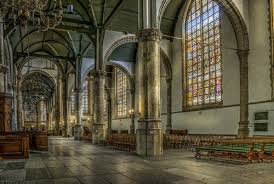
Inside the Sint-Jan, it is dark. Only the faint glow from the streetlamps outside touches the stone floor. Liza walks cautiously, placing her feet precisely on the narrow seams between the stones. She always does this. She finds it disrespectful — and, to be honest, a little eerie — to step on the grave slabs. People lie buried beneath them. You simply don’t walk over them. She tries it on Sundays too, but when her mother notices, she always stops her.
“Don’t be silly, dear,” her mother would say. “They don’t feel anything, and it’s been years.”
Still, she can’t help it. Tonight, she can walk however she wants. No one else is in the church. Everything is quiet. Still. Dark. To her left, the tall stained-glass windows rise, faintly lit by the streetlamps outside. To her right stand the old wooden pews. A little farther on, they lower, and she will be able to see the pews on the other side — and the pulpit. In the middle of the church lies the open space before the pulpit, where musicians always stand so everyone can see them. Tonight, she will stand there, alone in the dark. Only the pews and the saints in the stained-glass windows will listen. No one will be there to say:
“Don’t you have homework for Monday?”
Or, as Pierre likes to tease:
“There she goes again — thinks she can actually play.”

She tiptoes forward until she is beneath the pulpit. Psalm 122 is posted on the boards. It’s a cheerful psalm, so she decides to try playing joyful music too. She sets down her case, opens it, and lifts out her violin. First, she tunes it, plucking the strings lightly. The sound startles her. Louder than she expected. The notes float up into the high, majestic arches, then fade. She holds her breath, listening. Has anyone heard it?
Probably not. Her parents are asleep, and if someone happens to walk by outside at this hour, they’ve likely had too much to drink to notice a bit of violin music. She begins again, quietly. A Pavarotti melody has been running through her head all week — now she wants to see if she can play it here. Last week, an orchestra from Amsterdam performed in the church. It had been magical. Liza helped serve coffee during intermission, then stayed afterward to listen.
She starts slowly, searching for the right notes, but soon her fingers remember them. She plays from memory, losing herself completely in the music, forgetting where she is, how late it is, whether anyone might hear, or that she has to be up early the next morning.
She lowers her violin and brushes a strand of blonde hair from her face. Warm from playing, she slips off her coat and drapes it over a pew. Then she starts again. She has no idea how late it is — she can’t see her watch in the dark.
Suddenly, she hears something at the back of the church. She freezes. There it is again — slow, shuffling footsteps. Someone is coming in. She ducks down. Quickly, as quietly as she can, she puts her violin away and grabs her coat. The footsteps are coming closer. She has to find a way out. Whoever is coming her way, she has to leave. She needs to go up the steps between the pews; at the top, she can slip down the other side and reach the back door. Silly of her to leave it unlocked.
Her heart pounds. She slips up the stairs. Nervously, she glances over her shoulder to see if the person can spot her. She pauses for a moment. Carefully, she sets her violin case on a step. She drapes her coat more neatly over her arm and tightens her grip on the case — but her hand slips. The case hits a bench. The sound echoes through the church.
Suddenly, a head appears at the bottom of the stairs. In the dim light, she vaguely recognizes the shape, but not the face. It’s definitely not one of her parents. All at once, the enormous dark space feels suffocating. She clutches the violin case and bolts up the steps. At the top, behind the high wooden seat backs of the last row of pews, she hurries down the stairs, feeling each step with her foot. No streetlamps shine their light on these stairs.
She hears quick footsteps pounding across the grave-slab floor. He hasn’t taken the stairs like she did; he ran around the pews. They reach the aisle to the exit almost at the same time. Her pursuer is much taller than she is, and with the high stained-glass windows behind him, she can’t see his face. There’s no escaping now. With a few long strides, he’s beside her.
“What are you doing here?” he whispers sharply.
“And what are you doing here?” she fires back. And then, suddenly, she recognizes him.
Fifteen minutes later, she lies shivering in bed. She locked the church door, returned the key to its hook, and slipped inside unnoticed. She smiles to herself. She still got to play her violin for a while. If only that vagabond hadn’t interrupted her, she could have gone on much longer. Well, maybe it’s for the best. She has to work at the bakery in a few hours, and customers don’t appreciate being handed apple turnovers when they ordered hazelnut creams.
She dozes off, only to be jolted awake by her alarm. She smacks it, falls back into dreamland immediately, but the alarm isn’t having it and wakes her again ten minutes later. Now she really has to get up. She dreads looking in the mirror, but it’s not too bad. A little makeup does wonders, and soon she’s in the kitchen for breakfast. Her head feels heavy, and she struggles with her cheese sandwich.
Everything in the house is still quiet. On Saturdays, she’s always the first one up. Her father comes next; as sexton, he opens the church and souvenir shop before the first tourists arrive. Her mother helps in the shop, and Pierre picks up groceries at the market before heading to his job at the Tapperij.
Just after seven-thirty, she steps into the cold morning. Across the market square, crates of vegetables and other goods are being hauled back and forth. The bustle wakes her up — she’s not the only early riser. Every now and then, she waves to a boy or girl she knows.

“Hey, Gerard!” she calls to the cheese stall helper, waving. Carrying a large wheel of cheese, he calls back, “Heui!”
The bakery door is unlocked, and Liza slips inside. It’s warm and cozy. Poor Gerard — on Monday, he’ll be complaining again about spending the whole weekend in the cold. She heads to the back and hangs up her coat.
“Morning, Liza,” Stefany, the baker, greets her.
Before Erika, the other shop assistant, even arrives, Liza is already busy. Her tiredness fades as she gets to work. Around ten o’clock, there’s a lull, and she enjoys a cup of coffee — but soon the shop fills with customers again, and she’s back on her feet.
By noon, every table in the little café is full. Liza darts back and forth with coffee and pastries. Customers are glad to warm up in the bakery and enjoy the smell of fresh baking before heading back out to shop. She barely has a moment to glance outside.
She doesn’t see the homeless man walking by, pausing to peer through the window.
At five, they lock the door behind the last customer. The mops and cleaning cloths come out, and for an hour, they scrub and polish the bakery.
“Girls,” Stefany says, “that’s enough for today. Time to enjoy the weekend.”
Erika and Liza wipe the sweat from their foreheads and let out a sigh of relief. They put away the buckets and cloths and, after a tired “Have a nice weekend,” leave the bakery, each carrying a box of leftover pastries. Gerard has loaded the last of the unsold cheeses into his boss’s van and is about to head home as well. He looks exhausted after a long day at the market.
“See you tomorrow!” he calls.
“See you!” Liza replies, crossing the market square and slipping between the narrow streets.
“Did you have a good day?” a voice asks from behind her. She turns and sees the homeless man approaching.

“Yes,” she says. She hesitates. Should she ask if he had a good day too? She doesn’t. Instead, she opens the pastry box.
“Go ahead, pick one,” she says.
A broad smile spreads across his face, and carefully, he selects a fruit tart.
“Delicious, thanks,” he says warmly. Liza quickly closes the box, cheeks burning, and hurries off. She doesn’t look back. In her mind, she sees him standing there on the cobblestones, holding the colourful pastry. Her heart races. Again, she sees that radiant smile on his face. So intense, so warm. It makes her feel flushed and breathless. What is she supposed to do with this? She sees something in his eyes — the same softness she sometimes notices in John’s. But John is just a classmate she also sees at church. She can ignore him if she wants. This, however, feels much harder to grasp. He could appear and speak to her at any moment while she’s walking through the city.
Only when she reaches the sexton’s house does she glance over her shoulder. There’s no one around. She steps inside and sets the pastry box on the kitchen table.
“Hi, Mom,” she greets her mother, busy preparing dinner.
“Hi, Liza. Did you have a good day?”
“Yeah, it was busy, but nice.”
Not long after, she sits at the table with her parents, chatting about the fun and tricky moments of the day.
Sunday morning, ten to ten. Liza is the first to arrive outside the church. Within five minutes, the usual group gathers — Hanneke, Gerard, John, and a few others.
“Shall we go inside?” John suggests. “It’s too cold to stay out here.”
Inside, they find a spot up in the nave of the church. There’s a cozy murmur of conversation before the service begins. During the singing and prayers, Liza can keep her mind focused, but during the sermon, it starts to wander. From her high seat, she looks straight down at the pulpit where she stood on Friday night.
Again, she hears the notes of music floating through the high arches of the old church. She sees the soft light streaming through the windows and feels that sudden jolt of fear when the homeless man had come in. Who is he, really? She often sees him wandering the market with other homeless men. But why was he out so late that night? Couldn’t he sleep because of the cold? He surely hadn’t been drinking — she would have smelled it. Where does he even sleep? Did her violin wake him? It couldn’t have been that loud… could it? Suddenly, she isn’t so sure.
Then John nudges her, sitting as usual beside her.
“Daydreamer…” he whispers, smiling. He offers her a peppermint. Liza shakes her head. No candy in church — too distracting for the minister, watching all those chewing mouths.
“On a diet, fatty?” John teases. Liza rolls her eyes, remembering the time he tried to wrap his hands around her waist. They fit exactly — though she had held her breath, and his hands are fairly large, she silently excuses herself.
“You’re all coming over for a drink after, right?” Liza asks as the service ends. The group agrees instantly. They cross the short path between the church and the sexton’s house, laughing and stomping inside. They kick off their shoes and hang their coats on the rack. Liza helps her mother serve drinks and treats. Pierre is there too, teasing the girls — clearly enjoying their reactions. They never learn. Even Liza, after seventeen years with him, sometimes falls for it.
After an hour, Gerard stands.
“I’m heading out,” he says. Immediately, the others rise as well, and after a lot of fussing, giggling, and jostling in the hallway, they head outside.
“Thanks for everything,” John calls, his head peeking around the living room door toward Liza’s mother.
“You’re welcome, my pleasure, it was fun,” she calls back.
The others go back into the room one by one to say goodbye. By the time they’re all on their bikes, a good fifteen minutes have passed. Waving to Liza, they ride off. She lingers by the door for a moment until they disappear around the corner, scanning the street in case she spots someone she knows. Then she slips quickly inside, into the warmth.
Pierre is just putting a fresh log on the fire as she enters the room. He turns halfway toward her.
“When are you going to officially announce your relationship with John?” he teases. “He’s practically eating you up.”
Liza shrugs.
“Maybe never, you know,” she teases back. “It’s a bit one-sided, isn’t it?”
“Come on, you’re being ridiculous. Handsome boy, rich parents — what more could you need?” Pierre continues, grinning.
“Exactly,” Liza says. “Handsome boy, rich parents, happy ending.”
She grabs her book and curls up in the armchair by the fire. Pierre can chatter all he wants, but for the rest of the day, she ignores him.

Did you enjoy the first chapter of the Christmas Story? Would you like to read other stories, too? I’ve two books for you, you can start reading today.
Hitchhiker: nineteen, homeless, and chasing a dream — can Nadia survive without losing herself? She left with hope. She stayed for survival on Victoria’s unforgiving streets.


Elsa, a stirring novel of resilience, heartbreak, and the unspoken bond between women who walk through fire and keep walking.


Check out the books of my fellow Vancouver Island Authors and Illustrators.
 Nettie Leeflang