Chapter 11
Knock, knock, knock.
“Girls, wake up!”
Knock, knock, knock. Liza and Leonora’s bedroom door squeaks open.
Tim’s cheerful face squeezes through. “It’s Christmas Day! Are you getting up?”
Two sleepy heads turn toward the door.
Leonora sighs. “Man, shut it, we’ll be up in a minute.”
But Liza can’t help smiling, and in a drawl, she says, “Is breakfast ready? I’ll be right there.”
“I’m going to set the table!” Tim calls, and the door slams behind him. Liza sits up and tries to pry her eyes open. A little light is already coming through the curtains. She’s looking forward to today. She can’t wait to sing the Christmas carols in church. This year, she doesn’t have to play in the little orchestra; others get that honor now. From her spot on the pew, she can fully enjoy the music and the Christmas sermon. She can leave it to the minister to offer his surprising perspective on the Bible stories. She’s often amazed at the insight he brings to so many topics. She appreciates how much study he puts into his sermons. Deep down, she knows his understanding doesn’t come from study alone. She envies him for knowing how to listen to God’s voice. She struggles with that herself, always wondering whose voices and impulses she is hearing and feeling. She would love to talk to the minister sometime, but so far, taking that step has felt too daunting.
Knock, knock, knock. Tim is being persistent this morning. Suddenly, a light bulb goes off in Liza’s head. Tim must be excited about presents, she realizes. Laughing, she swings her legs out of bed and not long after finds herself in the kitchen. She helps Tim set the table.
“We’ll just have to be patient until the others wake up,” she says apologetically. “They’ll probably be annoyed if I go wake them. You know what,” she adds, “I’ll read you a story to pass the time.”
Tim’s all for it, and together they curl up in the big armchair by the fireplace. For a bit of extra coziness, Liza has tossed a log into the fire, and it’s now crackling away pleasantly. Liza opens the thick storybook to a Christmas tale. When it’s finished, Tim sighs deeply.
“That was beautiful. Can you read another one?”
Liza laughs. “If it’s up to you, we’d be stuck in this chair all day.”
“Nice and warm, though,” Tim grins.
Footsteps rumble on the stairs, and Mom comes into the room.
“Well, you’re up early,” she says, surprised.
“It’s Christmas Day,” Tim explains. “We always get up a little earlier for the presents.” Mom laughs.
“Did you really think we had presents today, young man?” she teases. For a moment, he looks taken aback, but then he sees her smiling.
“You’re teasing me,” he says. Mom runs her hand through his hair.
“We’re saving the presents for tomorrow. Today we have so many other things to do.”
A little disappointed, he looks from Liza to his mother.
“You already got a small present from me,” Liza soothes him, “and I think you can manage to wait until tomorrow.”
“That’s way too hard,” he protests. Liza looks at him with a pout, her head tilted to one side. She doesn’t say a word.
“Okay, okay, I’ll try,” he finally gives in.
One by one, the others drift into the room as well, and they can finally sit down at the table.
The church service is indeed very lively, just as Liza had expected. Slowly, her eyes wander through the packed church. She isn’t even surprised when she spots Antonio among the crowd. It’s as if he senses her gaze. He slowly turns his head toward her and gives her a wink. She smiles and feels her cheeks flush.
“Who are you smiling at?” John nudges her. He’s sitting next to her, as usual.
“An inside joke that slipped out,” she whispers back. John gives her a slightly suspicious look. She’s definitely pulling his leg, you can almost see him thinking.
For lunch, they have soup with buns.
“Tomorrow after the church service, you’re not allowed to run off,” Mom says to Liza and Leonora. “Aunt Liesbeth and I are going to do some serious cooking, and you’ll have to taste our culinary skills.”
The girls nod obediently.
That afternoon, they’re heading to the drop-in centre on the Oosthaven to help prepare the Christmas meal. At five o’clock, the city’s homeless people are welcome to come and enjoy their Christmas dinner. Liza dreads it a little. She has no idea how they’ll be able to help.
Tim sits beside her, slurping his soup. He’s already been scolded by his mother a few times, but he doesn’t seem to care much. Suddenly, he bumps his elbow against Liza’s arm. The soup on the spoon she’s just about to bring to her mouth spills onto her new skirt.
“Hey, watch it,” she says, startled.
Tim looks up. “You spilled soup on your skirt,” he says.
“Yes, hello—because of you,” Liza snaps.
She feels herself growing a bit irritable. Why does her nice, new skirt have to get dirty of all days? What is she supposed to wear later? She wants to look presentable at the Christmas dinner for the homeless.
Then she has to laugh at herself. For the homeless—and for Antonio. What is she thinking? Why is she making the contrast between herself and them so obvious?
She dabs at the soup on her skirt with a napkin and says, “It’s fine. I’ll clean it later.”
For a moment, she catches sight of her mother’s face across the table. There’s a dark cloud hanging over it, but her mother doesn’t say anything. Liza can easily guess what she’s thinking. She must be furious that the expensive skirt already has to go in the laundry after being worn just once. Aunt Liesbeth has a dark cloud over her head as well.
She snaps at Tim angrily. “Why don’t you pay better attention? Now the new skirt has to be washed already.”
“It’ll probably come out,” Liza says, trying to calm her aunt. “And I’ll change into another skirt in a minute. At the drop-in centre, it’s probably not very practical to wear nice clothes anyway.”
“Can I come along this afternoon too?” Tim ventures.
“You!” his mother snaps. “You’ll just end up messing everything up there as well.”
“Mom,” Uncle Sander cuts in, “just let the boy come along if the girls are okay with it.” He casts a sideways glance at Liza and Leonora.
They look at each other in turn. “You can come if you don’t interfere with everything,” Leonora says.
Tim almost jumps out of his chair and bumps into his bowl of soup. The soup sloshes but doesn’t quite spill over the edge.
“See now what you’re doing?” Aunt Liesbeth continues to grumble. “Soon there’ll be even more clothes needing a wash.”
Liza can’t help smiling as she imagines Tim sliding through the muck at the drop-in centre because he’s just dropped a scoop of potato salad.
Liza and Leonora both put on something comfortable yet cheerful. They walk to the drop-in centre, while Tim dances all the way around them.
“Are you nervous or something?” his sister grumbles.
“No, but I’ve never seen a lot of homeless people together before, and maybe they’ll start smoking joints and drinking beer, and then it’ll get really lively, I think.”
“You can count on there being no alcohol,” Leonora says, “and if they do smoke a joint, they’ll have to do that outside, and they won’t be allowed back in.”
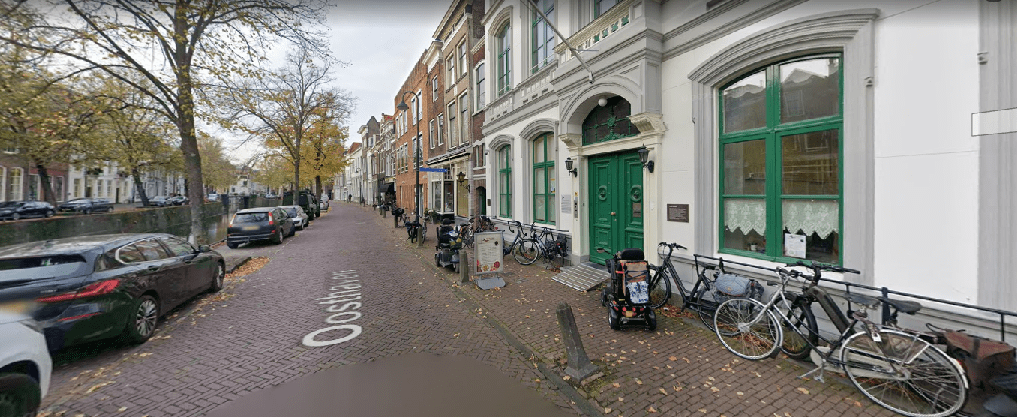
As they arrive, Tim peers through the windows. There isn’t a single homeless person to be seen inside the drop-in centre yet.
“Where are the homeless people?” Tim whispers in Liza’s ear.
“They won’t be here for a few hours yet. Right now we’re going to prepare the food and set the tables.”
“Oh,” Tim says. He sounds disappointed.
Liza takes him by the shoulders and gives him a playful shake. “We’re here for the homeless, not for ourselves, little man.”
Liza climbs the four steps to the large door and pushes it open. They step straight into a hall. A dark red carpet covers the floor. Square tables are arranged throughout the room in small clusters, with old-fashioned wooden chairs placed around them. Tablecloths are spread over the tables, each with a Christmas arrangement on top. Along the high walls hang large mirrors in gilded frames and beautiful paintings. The ceiling is decorated with plaster scrolls and flowers.
“What a fancy drop-in centre,” Leonora says, hardly daring to speak out loud.
“Weddings and meetings used to be held here,” Liza replies, “but now that parking nearby isn’t possible anymore, they’ve turned it into something else. I believe there are small apartments upstairs for single people. Shall we go to the back and see if we can find someone who needs help?”
Leonora nods and lets Liza lead the way. Tim has already wandered ahead and is standing in front of a painting depicting a hunting scene.
“That actually looks like something I’d enjoy doing someday,” he says.
Liza smiles at him, not quite sure what he means. She’s far too busy looking around for someone who can tell them what to do next. Various sounds drift in from a room at the back of the hall. It turns out to be the kitchen. As they step inside, Antonio is just about to head out. For a moment, he and Liza stare at each other in surprise, and then they both burst out laughing.
“I already told the kitchen ladies they’d be getting some extra help,” he laughs, and calls out to the women in the kitchen, “They’re here! I’ll make sure there’s plenty of people to feed.”
Then he leaves the kitchen, gives Liza a wink, ruffles Tim’s hair, and disappears.
A sturdy woman walks over to the girls and Tim. She nods toward the door and says, “If it were up to him, those homeless folks would get a Christmas dinner every single day. But that’s not going to happen; I wouldn’t know where the money would come from.” Then she continues cheerfully, “It’s great that you’re here; there’s plenty to do.”
The girls see it too, and for a moment, they have to swallow hard at the sight of the sheer amount of food piled on the table in the middle of the kitchen. They greet the four other women who are busy there as well, and are given a spot side by side at the enormous counter that runs along all four walls.
“For dessert, everyone gets ice cream with whipped cream and fruit,” the sturdy woman explains. “By the way, my name is Mina. How about you start by preparing the fruit and then whip the cream?” she suggests. The girls nod and look around, trying to figure out where the fruit is supposed to come from. Mina beats them to it and pulls out cans of fruit from the large table.
“These need to go into that big pot over there, then you lift them out with a slotted spoon and let them drain in the colander,” she instructs. She hands them a few bunches of bananas and bags of pears as well. “Once everything has drained, you can add those too,” she continues. She gives them small knives and can openers and then leaves them alone with the enormous pot.
Liza and Leonora glance at each other and let out a cautious sigh.
“We’re not going to be done with this anytime soon,” Leonora mutters.
“Just think of it as being for a good cause,” Liza says, lifting the lid of the pot and peering down into its depths.
“All right, we’re going to fill this thing,” she says cheerfully, “but not the way Aunt Mina suggested.”
Leonora looks at her in surprise. “Then how are you going to do it?” she asks.
“If you put that colander on top of the pot, we can just pour the cans straight in and let everything drain right away. That way we skip a step, right?”
“Okay, teacher, whatever you say,” Leonora replies.
“What can I do?” they hear Tim ask Mina. They glance over their shoulders and see Mina resting her thick hands on Tim’s narrow shoulders.
“You,” she says thoughtfully, “I think you can help Gerard and John. They’ll be coming in shortly to set up the tables in the hall and take care of everything there.”
Liza and Leonora exchange a knowing look.
“Well, this might actually turn out to be fun after all,” Leonora mutters under her breath. They chuckle and get to work, a little nervously.
John will be there too, Liza thinks. She hadn’t really counted on that. John and Antonio—she can hardly imagine a greater contrast. John lives with his parents and sister in a large house along the Reeuwijk Lakes. She went there last year, when he invited the entire class to his birthday party. Secretly, she had suspected at the time that this was his only way of getting her to come to his house. On her own, she would never have gone. She finds him a very kind and funny young man. In fact, he has everything a girl might find attractive: he’s friendly, tall, handsome, wealthy, and does well in school. What more could you ask for? His parents are kind, cheerful people, and they attend the same church. There would be no problem at all having a relationship with him. And yet she keeps him at a distance. Deep down in her heart, she knows why.
Then the kitchen door is flung open.
“A very merry Christmas to all of you!” two cheerful voices call out. The women turn their heads toward the door and greet the two boys with laughter as they come in. Tim immediately bolts forward and runs over to Gerard.
“I’m allowed to help you,” he says.
“And who are you, little runt?” John says, bending down toward Tim and giving him an appraising look. Tim isn’t impressed in the slightest and says, pointing at Leonora and Liza, “I’m her brother.”
“Brother?” John repeats, and the boys burst out laughing together. Then Gerard places a hand on Tim’s shoulder. “Big brothers can help us, I think—don’t you agree, John?” John pulls a solemn face and nods in agreement.
“All right, you boys,” Mina says, “get to work now. You’ve still got a lot to do.” She ushers them out of the kitchen. Liza just catches John looking at her over Mina’s head and smiling.
“See you later,” he calls. Gerard also quickly raises his hand to Leonora before disappearing into the dining hall.
The girls look at each other.
“Nice that they’re here, isn’t it?” Leonora says.
Liza nods. It is nice that they’re here—but it’s also a little complicated. How will Antonio and John react when they realize they’re both interested in her? She doesn’t know what her attitude should be so that she doesn’t hurt either of them. She could choose: give neither of them extra attention, give both of them the same amount, or choose one of them. She decides that when the boys ask for her attention, she’ll simply give it. Why should she have to choose between them? Neither of them has ever asked her to. And besides, she thinks, I’m only seventeen. There’s still plenty of time to commit myself to someone.
Cheerfully, she gets back to the messy job of dealing with the fruit. Meanwhile, the kitchen fills with delicious aromas of roasted meat and freshly cut vegetables. Everywhere there’s the sound of knives and spoons against pots and on chopping boards. After the fruit, Liza starts whipping the cream, and Mina gives Leonora a different task.
The mixer in the enormous bowl makes an incredible racket. It takes ages before the whipped cream is ready. Splashes fly everywhere, and Liza is glad she isn’t wearing her new clothes anymore. She watches carefully to make sure the cream doesn’t curdle, and now and then she tilts the bowl with both hands to see whether it still runs. At last, it holds its shape, and with a sigh of relief, she lifts the beaters out of the mixer. She shakes the excess cream off the “sticks” and licks one clean.
“Can I lick the other one?” she hears a voice behind her.
“You’re really good at sneaking up on innocent girls, aren’t you?” she says as she turns around and hands the beater to Antonio. Quickly, she wipes her mouth because she doesn’t like the look of having cream still on it.
The door flies open again, and Tim runs in, followed closely by John and Gerard. Oh no, Liza thinks, here comes the first confrontation. John looks at her in surprise and tilts his head as if to ask, What’s going on with that homeless guy? Liza smiles politely at him and picks up the bowl of whipped cream, setting it somewhere else on the counter. That way, she doesn’t have to look at either of them. She pretends nothing’s wrong and starts clearing away the pear and banana peels.
“Do we know each other?” John asks Antonio politely, holding out his hand.
“I’m John, Liza’s friend,” he says.
Liza’s ears practically start ringing. How dare he, she thinks.
Then she hears Antonio’s voice. “I’m Antonio, also Liza’s friend.”
For a moment, it’s completely silent behind her back, and then Tim breaks the silence.
“Wow, you’ve got two friends at the same time. I knew lots of boys liked you. If I were bigger, well then…” He gives her a meaningful look.
Everyone in the kitchen bursts out laughing, and, pretending to be embarrassed, Liza acts as if she’s about to give Tim a playful cuff on the ear. She feels sweat prickling on her back, and her hands start to shake. Mina comes to her rescue by shooing everyone back to work. In just under an hour, the homeless guests will arrive for dinner, and not everything is ready yet.
It takes a little while before Liza gets her hands under control again. She brushes the hair off her clammy forehead and absentmindedly follows the instructions Mina gives her. From the hall, strains of music drift into the kitchen.
“Hey, that’s great,” says the woman standing next to Liza. “The orchestra has arrived too.”
“If I’d known that,” Liza says, “I would’ve brought my violin along as well.”
“I think we’ll be needing your help with serving,” the woman replies. “You’ll see; we’ll be running ourselves off our feet, and by the time we’re done, we’ll probably be sleeping tomorrow in church from sheer exhaustion.”
“They won’t be done eating that late, will they?” Liza asks, surprised.
“No, they’ll eat quickly enough, but there’s still all the cleaning and tidying up to do. Don’t underestimate it.”
Liza hadn’t thought of that at all.
Over the next hour, curious heads keep peeking around the kitchen door, drawn by the delicious smells. Gray heads with beards, pale blond heads, and dark faces with shining eyes. Most of them are warmly wrapped in colorful scarves and hats.
“Shoo!” Mina calls to each new head, “Out of my kitchen, you lot!” As quickly as they appear, they retreat. But then one comes along who isn’t so easily shooed away.
“Hey, Mientje!” a hoarse voice calls from the doorway. “Hey, girl, how’s it going? Do you remember me?” Mina spins around angrily.
“Didn’t you hear what I just said?” she snaps loudly. Then her eyes widen a little, and surprise creeps into her voice.
“Is that you, Gerrit?”
“Wow,” Gerrit says, equally surprised, “you still remember me? Remember that time I asked you out?”
Mina actually flushes, but when she notices more curious heads crowding the doorway, she straightens up again. She grabs Gerrit by the coat and steers him toward the door.
“I don’t have time to talk to you now—maybe later.” She shoves him gently into the group of onlookers and closes the door. Muttering to herself, she returns to the kitchen. “Well, isn’t that something… such a good boy, too.”
When Liza glances at Mina again, a little later, now quietly at the counter beside her, she sees tears running down her face. A pang of sadness creeps up into Liza’s stomach.
Mina notices Liza looking at her and says, “I don’t get it. He was so incredibly smart. I never knew anything, and he often helped me with the harder problems.” She shakes her head. “Boy, oh boy,” she mutters.
It’s time to start serving the soup. The women carry several large pots into the hall and place them on the tables, which Gerard and John have arranged in long rows. Then Mart steps forward. Liza knows him; he organizes all sorts of activities at the church. Now, standing between the tables where the homeless are seated, he looks even taller and healthier than usual.
“Ladies and gentlemen,” he begins. How funny to address them like that, thinks Liza. She scans the rows of people. Scattered among them, she sees a woman seated among the men. Most of them hold a cigarette between their fingers, which doesn’t make them any more lady-like.
Mart continues, warmly welcoming everyone to this Christmas dinner, made especially for people who are, well, special, as he puts it.
How do those women do it, Liza wonders, living on the streets amid all that filth? How do they manage to keep themselves clean and take care of themselves? She spends quite a few minutes every day in front of the mirror, making sure she looks decent. She can understand men living on the streets better than women. Don’t they need warmth and companionship, too? What could possibly make people neglect themselves so completely, not do everything they can to have a home? Am I thinking too simplistically? she wonders. She decides she’ll ask Antonio about it in detail the next time she has a chance to speak with him alone.
Mart asks the homeless if he may lead them in prayer. He wants to thank God for all the wonderful food they’ve received from Him today.
“Good, yeah,” says Gerrit, “I always liked that at school too. The teacher would just talk to God like He was her best friend.”
Mart jumps in smoothly. “You know,” he says, “when the Lord Jesus was on earth, He was especially a friend to people on the margins of society. That’s why I believe He wants to be your Friend now too.”
Then he prays, thanking God for the delicious food He’s giving them today and for the friendship He offers to each of them. Occasionally, someone murmurs “amen” in response.
As the little orchestra plays Christmas carols, the lids of the pots are lifted, and the homeless eagerly eye the richly filled tomato soup. With longing eyes, they pass their bowls along, waiting impatiently to have them filled. Liza watches in surprise as some of them try to shovel the hot soup down as fast as they can. They must be starving, she thinks compassionately.
She steals a glance at Antonio, who carefully sips his hot soup. Then she looks again, more closely. Suddenly, it strikes her that he looks different from the rest. She tries to figure out what’s different. It’s not his clothes, she notes; they’re just as worn and dirty as the others’. What’s different is that he eats much more neatly, as if he’d had a better upbringing.
But that doesn’t have to be the case, she thinks; Gerrit probably also had a decent upbringing and education. She scans the line of people again, searching, and suddenly sees it. He looks much fresher and healthier. How can that be, she wonders, confused. Maybe it’s because he’s one of the youngest?
While checking which pots are empty and ready to be returned to the kitchen, she compares him to the other young homeless. There aren’t many, but the ones there have pale, drawn faces and messy hair.
Antonio seems to be having a great time. He appears to know everyone at the tables and gives different people attention.
“Will you be looking at me, too, today?” John asks as she passes by. Caught off guard, she looks at him, and on a playful impulse, she gives him a bold wink. He lets out a deep sigh.
“Good, a small part of my day is already going well. Now for the rest,” he murmurs. She quickly sticks her tongue out at him before disappearing into the kitchen.
Mart is in charge during the dinner and announces that, between courses, there will be occasional readings.
“We’ll start with the reading of the Christmas gospel. Truus will do that for us.” Truus sets down the pan she was about to take to the kitchen and walks to the microphone. She picks up a small Bible and reads the first section of Luke 2. The other women wait to clear the tables until she is finished. Meanwhile, Liza looks around. Here and there, she sees a hand discreetly wiping a tearful eye.
Are these people thinking back to the past, she wonders. Back when they still went to Sunday school and, at Christmas, received a book and a bag of fruit and candy. How did all these people end up leaving the church? She doesn’t believe it’s only setbacks that caused it. Maybe the behavior of other churchgoers drove them away. No, she decides, that can’t be it either. If you really have a connection with God, you can always move and join another church somewhere else.
I think, she tells herself, that really no one wants to do what God commands. Maybe everyone thinks following Jesus is a burden.
A warm, happy feeling rises inside her. She is glad that she can tell God everything that troubles her and that she can see things change when she asks. She has no deep conversations with her own father and mother; they are always busy with work. Conversations with friends don’t go very deep either. She sighs softly at the thought. Does everyone live this superficially? She can’t believe it. Why don’t people share what really drives them?
She glances at the weathered, wrinkled faces around her. Some of the homeless look as if they can’t even count to ten, but there are also those who probably have good minds. Liza’s thoughts spin. She wishes she could know everyone’s background. She wishes she could help think of ways they could lead normal lives again—going to work every day and returning to their own homes at night.
Her eyes wander along the rows, and with a start, she realizes that Antonio is looking at her. He furrows his brows and smiles encouragingly.
Truus finishes the reading and suggests they sing “Now be welcome, Jesus, dear Lord”. The orchestra starts, and slowly the first words rise from the tables. It doesn’t sound beautiful, but Liza takes a deep breath to hold back her tears as she hears all those dull, cracked, trembling voices sing this old hymn. She can hardly sing along, but she moves her lips because she doesn’t want anyone to see how she feels.
After the hymn, she busily starts clearing the tables again, and then the platters of meat, vegetables, and delicious sauces arrive. Most of the homeless dig in without paying attention to their neighbors. Mina and the other women are experienced with this and constantly remind everyone to divide everything fairly. They’ve also kept some platters back to serve those who missed out earlier.
The atmosphere is good, but Liza watches in dismay as the tables become a messy blur of spills. Oh well, there’s such a thing as soapy water, she thinks. They’ll get it clean again.
Where’s Tim? she suddenly wonders. She scans the room and spots a little homeless boy sitting between two older women. They pile food onto his plate and pat him on the head. Tim enjoys it and chats endlessly with the wrinkled faces next to him. Yes, Liza smiles, this is how you can help people, too. Talk with them, and give them the chance to care for you.
Outside, it has grown dark, and through the tall windows, the streetlamps with their Sint-Jan-style shades cast a soft glow. Snowflakes drift down again, settling on the low walls along the canals. Inside, it is warm and cozy. The orchestra plays, and from time to time, the homeless guests join in spontaneously to sing along. There is laughter, and tears are quietly wiped away. Mina’s women get sore feet from carrying trays full of colorful, fragrant dishes back and forth.
Finally, the moment comes when the trays are truly empty, and the guests lean back at the tables, satisfied.
“Ladies and gentlemen, before we finish the meal,” says Mart, “let’s have a cup of coffee together.”
Once the coffee is finished, Mart offers a prayer, asking God’s blessing for everyone present. The orchestra plays one last Christmas song, and slowly, somewhat reluctantly, the homeless begin to leave, looking for a place to sleep for the night. The musicians pack up their instruments and help restore the room to its original state. In the kitchen, scrubbing and washing continue with gusto. Gradually, the plates and serving dishes are cleaned and put away, the counters cleared and spotless, and finally, the floor is mopped. The women let out a long sigh of relief when the job is done.
“We can be proud of our work, can’t we?” says Mina, her face flushed beet-red, sweat glistening on her forehead. Everyone agrees; the evening has been a great success.
“We’re good for another year,” jokes one of the women.
Liza can’t resist asking a question. “What actually gets done for these people between now and next year?”
“A lot,” sighs Mina. “We have volunteers who keep the drop-in centre open for a few hours each day and serve coffee to the guests. But it’s not just about serving coffee,” she adds meaningfully, “you also have to listen to their stories, and sometimes they ask for advice. That’s not always easy,” she sighs again. “Sometimes I can’t even give myself good advice, let alone for these people. Sometimes I lie awake, mulling things over. There’s so much to take in,” she admits. “I really admire you,” is all Liza can manage to say, and Leonora can only nod in agreement.
Tim has flopped onto a kitchen chair. “I had a lot of fun, but now I’m really tired,” he says in a sleepy little voice. He yawns deeply and rubs his eyes. “Shall we go home?” he asks his sister.
“He’s absolutely right,” says Mina. “We should be heading out.” Everything in the hall has been tidied and scrubbed clean. Gerard and John are still talking with Mart, but they get up as the women leave the kitchen.
“Shall we walk you home?” the boys suggest to Liza and Leonora. The girls agree, and soon everyone is standing on the sidewalk in front of the drop-in center.
“Have a wonderful Christmas Day tomorrow,” says Mart, and then everyone heads off toward their own homes. The youngsters don’t talk much on the way. It’s cold, and the snow is still falling lightly.
“I just hope everyone has found a place to stay for the night,” Liza says, a little worried.
“During Christmas, there’s extra space available for people,” Gerard reassures her.
“Are you worried about your homeless friend?” John whispers in her ear. In the dark, Liza can’t tell if he’s teasing or serious. She shrugs.
“I think he’s being looked after,” he says, a little enigmatically. Liza looks at him questioningly, but all she gets in response is a smile. John puts an arm around her and draws her close.
“You shouldn’t worry so much about those people. A lot is being done for them.”
Liza doesn’t answer. What he’s suggesting isn’t true. Of course, there are people who care for others, but the help isn’t always enough. Why, then, do homeless people still die from the cold in the cities, with so many people and warm homes all around? Once again, she resolves to talk to Antonio about all the questions burning inside her. She lets John’s arm rest on her shoulders, but secretly she glances around, hoping not to see Antonio anywhere.
At the sexton’s house, the boys say goodbye to the girls and Tim. They still have a way to bike before they get home.
“See you tomorrow at church,” Gerard whispers into Leonora’s ear.
“See you at church tomorrow,” she whispers back. “Promise you’ll come get me?” she adds quickly.
“Okay, I will,” he says. Then the girls and Tim disappear behind the wide front door. Their parents are sitting comfortably around the hearth with a glass of wine. Tim still has enough energy to recount everything in vivid detail. He rubs his belly. “I had the most delicious meal from two homeless ladies,” he says.
“Shouldn’t they have eaten it themselves?” asks Uncle Sander.
“They said they weren’t used to eating much anymore, so I could have it. They were a bit thin, now that you mention it,” he says thoughtfully. Then his story trails off.
“I’ll take you to bed,” says Aunt Liesbeth to Tim. “You must be exhausted from everything.” Tim nods, wishes everyone goodnight, and heads up the stairs.
The girls flop onto the couch and kick off their shoes.
“How was it?” asks Liza’s mother.
“Good,” Leonora replies simply. They sit slouched like two sacks of flour on the couch.
“I’m too tired to go to my bed,” says Liza. “We’re sleeping here tonight.”
But a little later, they get up and, without much fuss, collapse into their own bed. That night, every image drifts through Liza’s mind like snowflakes. Again and again, she sees the homeless men and women leaving the hall, one by one or in small groups, stepping back into the cold. Where have they all gone now? Isn’t it a cruel shock to be sent out into the freezing air after being in such a warm, cozy place?
In her dream, Liza sees Antonio walking in the market square. He keeps stumbling over the uneven cobblestones. At the lit windows, he pauses for a moment each time, but no one opens the door for him. Liza tries to catch up, but she can’t reach him. Then John grabs her arm and leads her into a store. But it’s not a store—it’s the huge living room of his parents. By a large open fireplace, his mother and father sit in expensive leather armchairs. They smile at her but say nothing.
John guides her to a sofa, and they sit down silently. Then she notices a large window. Outside, snow is falling, and Antonio walks through it. She stands and heads for the door—but no one follows her. She is back at the market. She shivers; her coat is gone. Antonio is nowhere to be seen. The market is deserted and dark. Only the lamp shades with the Gouda stained-glass panes give a little light.
When she turns to go back inside to John, she can’t find the door. Every house is dark; not a light is on. She wanders along the street until she finally finds the alley leading to Sint-Jan’s. It takes an awful long time to get home. She sees the back door of the church open and steps inside. Everywhere, tables are piled high with delicious food, and churchgoers are laughing and enjoying themselves. Why didn’t she know this was happening in the church today?
She sits down in an empty spot, and suddenly Leonora and Tim are at her table.
“Why don’t they eat at home?” Tim asks.
A woman next to him replies, “These people have a home, but it’s not cozy there. That’s why they come here.”
Liza looks around the church, and wherever she glances, there are people. The church is packed. She feels suffocated. Is it really not fun at anyone’s home? Why are they happy here? Why don’t they make it nice at home? Liza feels like she’s going to choke. What a mess everywhere.
She gasps for air and turns around. Then she wakes up, a sliver of light peeking through the curtains shining on her face. Her clock reads half past eight. Leonora is still asleep. Soon, the boys will come to pick them up to go to church. Strange dream, Liza thinks, she doesn’t understand it at all. In the kitchen, she hears the clatter of pots and Tim’s high-pitched voice. Now she wants to get up too and have a nice breakfast. Last night, there wasn’t much time to eat, and she can feel it now.
At a quarter to ten, the doorbell rings. Uncle Sander opens the door. Gerard and John are standing on the sidewalk.
“We’re here to pick up the ladies,” Gerard announces.
“The ladies?” Uncle Sander muses. “You mean the young ladies, I suppose.”
The young men nod vigorously.
“Come inside for a moment, and I’ll check on them for you.” Uncle Sander knocks on the girls’ bedroom door.
“Hey, we’re coming!” a voice calls from behind the door, and immediately the door flies open.
“You’re quite the picture,” Uncle Sander says admiringly as he looks at the girls. Judging by the boys’ expressions, they seem to agree. Tim stands behind his father, sneaking glances from one to the other. His eyes are shining. This is the vacation of his life. Just as he’s starting to notice pretty, kind girls, he gets to watch how older boys and girls try to impress each other. Very interesting.
Five minutes later, they walk carefully over the slippery cobblestones toward the church. A thin layer of snow still covers the ground. After the service, the group that always waits for each other at the church drinks coffee in the sexton’s house. Not everyone is there; during the Christmas holidays, most have to be home or visit family. Gerard and John don’t stay long either. After an hour, the house is quiet again.
Liza picks up her violin and plays a sad tune. She can’t stop thinking about the shelter. Her mind keeps circling the question of how she can do something for the homeless. She doesn’t have money, and she only has free time during the holidays. She feels very limited in what she can do. She resolves that she’ll figure something out this holiday.

Just then, Mom and Aunt Liesbeth enter the room carrying two large boxes full of presents.
“Here comes Santa!” Aunt Liesbeth calls.
Everyone gets up from their chairs, crowds around the boxes, and tries to see what might be inside. They set the boxes in front of the fireplace and grab Tim by the collar.
“You get to be Santa today,” Mom says, placing a red Christmas hat on his head, decorated with white fur and little bells. Tim kneels by the boxes and starts pulling the presents out one by one. He reads the names on the wrapping paper aloud and hands each gift to the right person.
“Wow!” he exclaims. “This one’s for me!” Immediately, he forgets the rest of the presents and excitedly tears the paper off a large box.
“Wow!” he exclaims again. “A remote-controlled car! That’s exactly what I wanted.”
“Hey, man,” Pierre says, nudging him in the shoulder, “are you going to keep handing out presents, or should I take over?”
“You take over,” Tim replies immediately. “I don’t have time for that right now.”
Pierre laughs and steps in to help. Liza and Leonora each receive a beautiful scarf with intricate patterns and a kit full of beads and supplies to make necklaces and bracelets.
“The rest of the day, we’ll be busy, don’t you think, Leo?” Liza says. Leonora nods. They’re delighted with their gifts and immediately get to work. On the smooth wooden table, they each spread out a towel and arrange their beads. They measure and rearrange until the beads are in the order they like best.
Mom and Aunt Liesbeth are busy in the kitchen preparing the meal. Delicious aromas drift through the room. Everything that appears on the table an hour later looks fantastic. Everyone enjoys the meal and the cozy atmosphere. By the time the girls clear the table, dusk is falling. Even Tim has managed to stay at the table that long. Pierre hasn’t said much during dinner.
“I’m going to take a walk around the church,” he announces. Everyone is fine with that. Liza walks with him to the hallway.
“How’s it going?” she asks quietly.
“I was just going to tell you on Mira’s behalf that you played beautifully during the performance,” he replies softly.
“You were there too?” Liza asks, surprised.
Pierre smiles. “Didn’t I tell you?”
Liza feels embarrassed for not taking it seriously. “Sorry, I completely forgot. I’ve been too wrapped up in myself, my own problems and pleasures.”
“That’s okay. Worrying about things won’t help me. If I need something from you, I’ll tell you, okay?”
“Okay. I’d like to help you.”
The front door clicks shut behind Pierre, and Liza makes her way back to the living room. So many love problems, she thinks. Pierre and Mira—something her parents probably wouldn’t approve of; herself, caught in a similar situation with Antonio and John vying for her attention; Leonora and Gerard, living so far apart. Worrying won’t help, Pierre had said. She should take his advice and focus on living one day at a time.
The rest of the afternoon and evening pass pleasantly, chatting around the fireplace and singing Christmas carols to Liza’s violin. Mom and Aunt Liesbeth bring out snacks and warm drinks along the way. Liza and Leonora put the finishing touches on their new jewelry and proudly show off their creations.
Eventually, it’s bedtime for everyone, and not long after, the house falls quiet.
The next morning, the girls sleep in. It’s Thursday, market day. Liza isn’t helping the haberdashery lady today; she’s taken the day off. Just after Christmas, no one comes to buy ribbon or thread anyway. Around ten-thirty, the girls step out and head into town to explore some charming little shops.
“I smell something delicious,” Liza says an hour later as they near the market. “I think someone’s making oliebollen.”
Sure enough, there’s a stall where a baker drops large spoonfuls of dough into a deep fryer. A long line of customers waits.
“On to the next feast,” Liza teases. “Shall we get one too? Do you want one?” she asks Leonora.
“All right, just one,” Leonora agrees.

When it’s finally their turn, they each buy an oliebol. They bite into them eagerly, sugar sticking to their fingers, as they wander through the market.
“You know what would be a fun idea?” Liza suddenly says. “What if we bake oliebollen ourselves and bring them to the shelter?”
Leonora frowns. “Do you think your mom will like the idea of you greasing up the kitchen? I think it’s better to ask if we can use the shelter’s kitchen. Then everyone who comes will get a warm oliebol right away.”
“Girl, your ideas are amazing! Shall we ask now?” Eagerly, they head to the shelter on the Oosthaven. The door is open. At a table, a few men sip coffee. The kitchen door is open too, and a woman is busy inside. The girls greet the men and walk straight to the kitchen.
“May we ask you something?” Liza says politely.
“Of course, go ahead.” The woman wipes her hands on a towel and smiles at them kindly.
“We were just walking through town and smelled oliebollen. Then we thought it would be nice to bake some for the shelter. We’re worried we might not be allowed to do it at home, so we wanted to ask if we could do it here,” Liza explains. She and Leonora look at the woman expectantly.
“That’s such a sweet idea,” the woman says, “but we don’t have the ingredients here. You’ll have to buy them yourselves. I’ll be here tomorrow too. If you come around nine, you can get started right away. How many do you plan to make?”
The girls shrug.
“We haven’t thought that far ahead,” they admit.
“Let’s do a little calculation,” the woman suggests. She grabs a pen and scrap paper from the counter and sits at a table in the hall. The girls pull up chairs, and after a little while, they’ve figured out exactly what they’ll need.
“Do you have money for the ingredients?” the woman asks.
“Maybe not enough—we’ll have to check at home,” they answer.
“You know what,” she says, “just see how far you get and buy the ingredients this afternoon. I’ll expect you here tomorrow morning.” She hands them the list.
Outside, Leonora says, “We’ll try to beg for some money at home.”
Full of energy, they walk back. Only Uncle Sander is home. Leonora launches into a passionate plea for the homeless, and surprisingly quickly, he agrees. A few minutes later, he pulls fifty euros from his wallet.
“Be careful with it, okay?” he warns.
“No problem,” Leonora replies.
Armed with a huge shopping bag, they head to the supermarket nestled among the buildings around the market square. It’s easy for them to find what they need—there’s a whole rack set up specifically for oliebol ingredients. Laden with flour, oil, apples, currants, raisins, and candied peel, they leave the store.
“And where are the ladies off to, so heavily loaded?” Antonio asks, passing by the shop.
Liza flushes in surprise, but Leonora has an answer ready.
“We’re going to spoil you,” she says mysteriously.
“Spoil us?” Antonio repeats slowly. “How are you going to do that?”
“Just wait and see,” Leonora says, pointing to the open bag between them. Antonio leans over it and then looks at the girls one by one.
“You’re sweet,” he says softly. “When are you going to do it?”
“Tomorrow, at the shelter,” Leonora replies.
“Of course I’m coming too, you understand that,” he says with a laugh.
“Yeah, smarty,” Leonora shoots back, “it’s for you too, you know.”
“Should I carry the bag?” Antonio offers.
“Oh, no,” they say in unison, “we can manage it ourselves.”
“Alright, as you wish,” he laughs. “See you tomorrow then. I’m just going to stop by someone’s place first.” He turns and walks toward the Kleiweg.
The girls carry the bag into the shelter, relieved to arrive. Their hands ache from the heavy strap.
“Good to see you made it,” says the woman at the shelter. “I haven’t even introduced myself yet—I’m Sandra.” She shakes their hands, and the girls give their names in return.
“We helped out at the Christmas dinner the day before yesterday,” Liza explains, “so we thought we’d do something for the shelter again.”
“Oh, are you the girls Mina mentioned? She was so happy you were there.”
Liza and Leonora smile shyly. Over cups of hot chocolate, they tell Sandra how the evening went, and she shares fun stories about the shelter. From time to time, Sandra gets up to pour a drink for someone who comes by looking for a bit of warmth and company. Feeling satisfied, the girls head home.
“I’m really looking forward to tomorrow,” Leonora sighs. “There’s so much more to do in the city than at home.”
“Don’t forget, it’s only December that’s packed with fun events. In January and February, you won’t know where to look for excitement,” Liza says.
“Still, I’d rather live here,” Leonora says.
“Ah, that’s just your vacation feeling talking.”
“I don’t know,” she says slowly. “I’ve made better friends here than I did in Switzerland.”
“Maybe you should look for friends from your church and forget about your gothic friends,” Liza suggests.
“It won’t be easy, but I think I’ll give it a try,” Leonora says. Liza feels happy and grateful. Luckily, she thinks, there’s a chance she can really break away from the old crowd. She gives her a reassuring smile.
“You’ll manage it, I’m sure.”
The next morning, they are already on the doorstep of the shelter at five minutes to nine. They’ve brought Tim along, too.
“You get to hand out the oliebollen,” Liza had told him. He nods enthusiastically.
Sandra isn’t there yet, but she soon rides up, parks her bike under the window, and locks it.
“You’re really eager, aren’t you?” she says admiringly.
The girls laugh. “We set our alarms extra early, even though it’s vacation,” Liza explains.
“Of course, you’re on vacation,” Sandra says. “Well, I think you’re brave.” She opens the door and switches on a few lamps. “It’s dark today, isn’t it? Looks like it’s going to snow again.”
Liza peers through the tall windows. The sliver of sky above the row of houses across the canal is indeed grey. She shivers. It’s not warm in here yet either. Sandra walks to the thermostat at the far end of the room and twists it.
“There, a bit of warmth first.”
They hang up their coats and wash their hands. Eagerly, they get to work. Apples are peeled and chopped. Tim picks the sticks out of the currants and raisins. They scrub a few large buckets clean and pour the batter in. They cover them with tea towels and place them near the heater. The oil goes into two of the widest pans they have, and the fire under the pots is lit.
“Now we have time for a cup of coffee,” Sandra decides. “The first guests will be arriving soon.”
About an hour later, the batter has risen enough, and the girls start frying. The beginning is tricky, and the oliebollen that come out of the pan don’t look perfect.
“You can eat the ugly ones,” Leonora tells Tim. He doesn’t mind at all, and soon he has two misshapen, hot oliebollen down his throat.
“Hi!” Tim calls when the door opens a little later. “Do you want an oliebol?”
The girls glance back and see Antonio in the doorway.
“They’re not ready yet!” the girls shout. “You have to wait.”
“Here,” Tim says. “This one’s a little messed up, but really tasty.” He offers Antonio an oliebol and holds a small dish of powdered sugar in front of him. He eagerly searches for napkins as he watches Antonio lick his fingers.
More oliebollen come out of the pan, and Tim carries a tray into the hall to hand them out to visitors.
“Can I help you with anything?” Antonio asks.
The girls shake their heads.
“You can help by eating the oliebollen,” Liza says with a laugh.
“That’s a fun job,” he grins, quickly picking one from the tray.
Soon, the smell of fresh oliebollen drifts through the hall, which is filling with more and more people. The homeless guests visibly enjoy the warm treat, taking the oliebollen from Tim with grateful smiles.
Tim is ecstatic. With rosy cheeks and sparkling eyes, he runs back and forth, handing out oliebollen and hot chocolate, calling out enthusiastically to anyone who wants one. He beams with pride at every friendly nod and every “thank you” he receives.
After a few hours, the last bucket of batter is nearly empty. The girls let out a sigh of relief as the final spoonful hisses into the pan.
“I had so much fun doing this, but now I’m done,” Leonora sighs.
They finally take an oliebol for themselves and flop into chairs.
“Now we still have to clean everything up,” Liza says to Leonora.
“We’ll manage,” Leonora replies firmly. “We just do it.”
Determined, they stand and grab cleaning cloths, working with hot, soapy water. Everything gleams and smells fresh again. By dinnertime, they arrive home utterly exhausted.
“You’ve certainly made a whole afternoon of it,” Aunt Liesbeth says. “And you smell!”
“Of course we do!” Tim shouts excitedly. “We baked oliebollen for the homeless!”
“Pa,” Leonora says, “here’s the change from the ingredients we bought yesterday.”
“You paid for that?” Aunt asks, frowning.
“Yes, I did. To be exact, I still have ten euros left from the fifty I gave the girls,” he says defiantly.
“For that money, I could have bought a nice blouse,” Aunt grumbles.
“A nice blouse?” Uncle Sander repeats, puzzled. “Did you really need one?”
“Needed, needed,” she mocks, “you can always use a blouse. Those oliebollen are gone already, but a blouse lasts longer.”
“Girls,” Uncle Sander says, “tell us; were the homeless happy with what you baked?”
The girls nod. Tim nods enthusiastically as well. “They were so happy, and they loved it,” he says.
“Alright, let’s end this discussion,” Uncle Sander suggests. “These people have so few good things in their lives. I think we can both agree it’s important to do something nice for others, and we have enough money that you can still buy a blouse.”
Uncle Sander picks up a book and sinks into the armchair by the crackling fire. Aunt Liesbeth turns away, scowling, and heads to the kitchen.
Liza, Leonora, and Tim exchange awkward looks. “Mom’s right—we do smell,” Leonora says. “Let’s shower and put on clean clothes.”
That night, they go to bed early, utterly exhausted, and Liza knows she has to be up again tomorrow for work at the bakery.
The weekend passes quietly. Firecrackers keep popping in the streets, though, because Monday is New Year’s Eve.
On New Year’s Eve, they all go to church together. Tim comes along too.
“You can stay up tonight,” his mother warns, “but don’t make excuses tomorrow morning about being too tired to go to church.”
“I’m not tired at all!” he protests.
“You will be, eventually, boy,” his father says, laughing.
After the service, they drink coffee together, and Ma sets a platter of oliebollen from the market on the table.
“Ours were much better, weren’t they, Liza?” Tim says after taking a bite. Liza smiles.
“Ours?” Leonora teases. “You mean just Liza’s and mine. You didn’t bake any.”
“Yes, I did!” Tim protests. “I helped! Really!” he tells his parents.
“Don’t get so worked up,” Leonora laughs. “We saw you working hard.”
He still looks a little suspicious, but a wink from Liza makes him laugh at the teasing. He curls up in a corner of the couch and tucks his legs in. Soon, he dozes off. Uncle Sander smiles and adjusts him to a more comfortable position, draping a warm blanket over him.
“I bet he won’t wake up until midnight, when all the fireworks go off.”
The others sit at the table to play Rummikub. Snacks and drinks come to the table again. Liza feels a pang of sadness. These days are all about eating and drinking. Who truly appreciates ending the year together? She glances around the table. Nobody seems worried. And is worrying really all that useful? Worrying doesn’t help, Pierre always says, and he’s right.
“Your turn, Liza,” Pa calls, pulling her from her thoughts.
Just before midnight, Uncle Sander gently wakes Tim. “Wake up, boy. It’s almost New Year’s.”
“What, what did you say?” he mumbles, rubbing his sleepy eyes.
The bells of the Sint-Jan strike twelve. Everyone hugs and wishes each other all the good things they can imagine.

Then the city explodes with fireworks. When Tim hears that the girls are joining Pierre to watch the fireworks at the market, he’s wide awake.
“Can I come too?” he shouts, looking at his parents for permission.
“Shall we go to the market too?” Uncle Sander asks Liza’s father. He’s up for it and pays no mind to the women’s remarks; soon, they make their way toward the square. The noise is overwhelming, but there are also spectacular bursts of colored fireworks. With almost no wind, a thick curtain of smoke hangs around the city hall. Liza inhales the sulfurous air and shivers from the cold.
“We can change into other clothes later; people will be able to smell us a mile away,” Leonora laughs. “The clothes I’m changing into later are my pajamas. I don’t know what you’re planning, but I’m heading home.”
Liza doesn’t mind, and both fathers have seen enough fireworks, too. Tim would stay for hours if he could, but that’s not going to happen. Pierre has suddenly disappeared, and Liza guesses where he is. She glances into the Tapperij but doesn’t see him.
“In a few hours, we have to go home,” Leonora sighs. “I could stay another week.”
“I really enjoyed having you here,” Liza says. “It’s too bad you can’t stay another week.”
The rest of the walk is quiet, and they’re relieved when, fifteen minutes later, they’re in their warm beds.
On New Year’s Day, after lunch, a taxi arrives to take the guests to the airport. Liza and Leonora hug tightly.
“We should send each other a message every day,” Leonora says.
“You can come again next vacation,” Liza decides.
“I want to, but I can’t afford it,” Leonora replies. “I’m glad I said goodbye to Gerard at church this morning and got his phone number. I’ll keep you updated on how things go,” she says.
“I’ll keep you updated, too,” Liza whispers. Then everyone gets into the taxi and waves enthusiastically from the windows as it turns the corner. Suddenly, the street is quiet. Liza feels empty. She enjoyed this vacation so much that she now falls into a little void.
“Come on,” Ma says, seeing her lost look. “Shall we tidy up the bedrooms? It’ll give us something to do. I need it too—my best friend just left, you know,” she explains.
Tidying up is indeed good therapy, but in the evening, after dinner, Liza goes outside for some fresh air. She feels restless. She’s lived in a fairy-tale world this vacation. Today is the last holiday for now, and the long, dark, dull days of January and February are ahead. She knows she’s at a point where she must make important decisions. It’s time to decide what to do after high school, and she must be clearer in her relationships with others. She doesn’t want to play with other people’s feelings. But who can tell her what’s best?
Lost in thought, she walks through the Willem Vroesentuin. On a bench sit a few Moroccan boys.
“Hey, girl, what are you going to do?” they call. Liza doesn’t answer and walks on. Maybe it wasn’t such a good idea to come this way. She quickens her pace and reaches the little bridge.
In the alley behind the Sint-Jan, someone approaches. She recognizes him immediately and smiles shyly.
“What are you doing here?” he asks, surprised. “You shouldn’t be walking alone here, you know,” he warns.
“I’m not scared,” she shrugs.
“I believe you, but there are always guys around,” he says, nodding toward the bench.
“I’ll scream if I need to,” she says bravely, “but what were you doing anyway?”
“I was on my way to you. I wanted to ask if you’d come boating with me on the canals.”
“Boating… on the canals?” she asks, astonished. Thoughts tumble over each other in her mind. Her, boating with a homeless guy on the canals? What if her father sees her? Or if someone else tells him?
Antonio takes her hand and gently pulls her along. She melts at his radiant smile and sparkling eyes. She decides to go for it; the whole world can take a hike. Hand in hand, they walk behind the church toward the boat dock.
 Nettie Leeflang